R.I.P. Jim Finley 1929-2014: Finley’s Boxing Gym Owner Was One Of A Kind
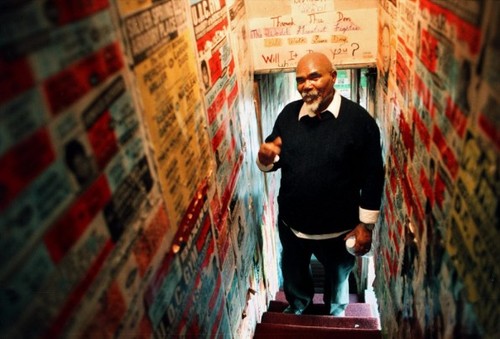
Photo by Joel Richardson for The Washington Post
by Aaron Tallent special to Stiff Jab
Let’s face it: the Fight Game walks the fine line between goodness and corruption.
The good is that young men have an opportunity to learn discipline they would often not find elsewhere. For that to work, the people providing the chance need to have their heart in the right place. They need to be people like Jim Finley. Sadly, we have already forgotten just how special Finley and his boxing gym truly were.
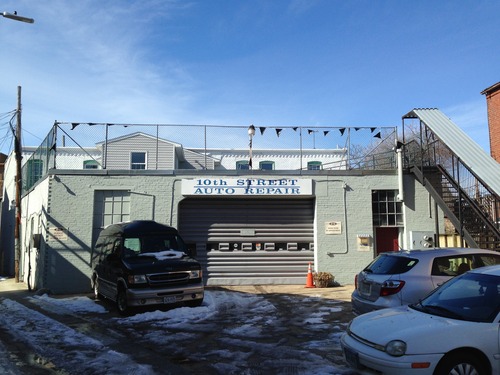
Finley, who died of congestive heart failure on January 28, ran the legendary Finley’s Boxing Gym from 1960 to 2001. The gym was over his auto repair shop on 518 10th Street, which sat in an alley running between 9th and 10th Streets in Northeast D.C. So low key was the gym that I lived at the entrance of that alley for two years after it closed, yet had no idea it ever existed.
At times, Finley was the only boxing gym owner in the country without a financial interest in the fighters, never serving as their trainer or manager. As he told Brad Berkwitt in 2001, his reward came from, “Guiding these young men in the right direction.”
One look at the fate of Keely Thompson, who opened what could have been considered the successor to Finley’s in 2004 with District government grant money, shows how special Finley was. Thompson’s gym grew significantly as more grant money poured in, and was a model of local community service for years. But it closed amid scandal, and Thompson was sentenced to 2 ½ years in 2013 for diverting grant money for his personal use.
Finley’s gym never expanded and there was no need. His income came from the auto repair shop, and his moral center came from his core values of discipline, work ethic and humility. Those values were spelled out clearly for the fighters in hand-lettered signs all over his gym:
“If you find a better gym, I suggest you join it. ”
“Hard work beats talent when talent does not work hard.”
“You are welcome to stay. Loud and vulgar language must go. Goodbye!”
All of those characteristics were instilled in James Calvin Finley when he was born on a sharecropper’s farm outside of Greenville, S.C., on March 5, 1929. He worked that farm with grandfather and two uncles before moving to Washington in 1943 to join his mother.
Finley’s first experience with boxing came from listening to Joe Louis fights on the radio in South Carolina, but in D.C. he had the opportunity to actually lace up the gloves. He took up at boxing at the Apollo Athletic Club on 6th and H Streets, NE, and joined its Amateur Athletic Union (AAU) club. As an amateur, Finley had success and won 75 fights, but turning professional was not in the cards.
“I always wanted to be a professional fighter,” he told The Washington Post in 1993. “But the Lord had other plans.”
Instead, Finley tried his luck with a couple of gas stations in Southwest D.C. in the 1950s, before purchasing the auto repair shop in 1960. When he noticed the large open space above the shop’s service bays, Finley built a gym.
The gym opened with little fanfare and grew over the years through word of mouth. Finley refereed AAU bouts and his establishment served as a place to buy or pick up tickets to area fights.
In the mid-60s, future light heavyweight champion Bob Foster began working out at Finley’s. Foster was from Albuquerque, N.M, but stationed at Boling Air Force Base, so he would come to Finley’s to train. There was no room to expand, but Finley credited Foster with helping him acquire more equipment, including a ring.
By the 1970s, Finley’s gym had become an institution that was still open to all who wanted to take up the Sweet Science. Finley charged monthly dues, but gave considerable leeway to fighters who did not have the money. Attitude and work ethic remained of primary importance and that was reflected in its conditions.
“Finley’s only entrance – a single, unidentified knife-and-graffiti-scarred door at the intersection of three unlighted alleys – makes the cave mouth leading to Dante’s Inferno look like a welcome mat,” wrote the Post’s Thomas Boswell in 1978. “If Beelzebub wanted to take a coffee break from the nether regions, he would look perfect leaning against the door to Finley’s gym puffing on a sinner.”
The late 70s and 80s saw boxing go from a sport with linear titles to one with numerous sanctioning bodies and titles in each division. Finley was always outspoken and did not bite his tongue on this issue or others like health plans and pensions for fighters. In 1993, he allowed to Rep. Bill Richardson [D-N.M.] and Sen. Bill Roth [R-Del.] to announce the introduction of the first boxing reform bill at his gym.
The two lawmakers were only a few of the celebrities to visit Finley’s gym. Sugar Ray Leonard trained there on occasion. George Foreman and Ken Norton paid visits. Numerous videos and films were shot there, including “Scorpio” and “Along Came a Spider.” Even legendary jazz musician Miles Davis would work out at Finley’s when he was town for a show.
One fighter that Finley had a tumultuous relationship with was Mike Tyson, who he supported through his first championship run and even his 1992 rape conviction. In June of 1997, he sent Tyson a letter inviting him to visit the gym. Later than month, Tyson was disqualified in his second bout with Evander Holyfield after biting Holyfield’s ear twice.
“He should suffer the most severe penalty possible,” Finley said. He would appear on CNN’s Both Sides with Jesse Jackson to make the same argument. “He does not deserve one dime of the…purse. He should be suspended for life…He’s had many more than three strikes. His true colors came out.”
Tyson did visit Finley’s gym in 2001 and showed the geniality and humility that has recently helped him overcome his laundry list of mistakes. After Tyson attacked Lennox Lewis at their fight announcement in 2002 and the bout had to be moved outside of Las Vegas, Finley helped with the unsuccessful lobbying campaign to bring the bout to Washington. His philosophy was that some city would stage the bout, so it might as well be the District.
As interest in boxing dwindled, Finley saw his gym crowd transform from fighters to a majority of professionals, who used boxing for fitness. He sold his auto repair shop in 1990 and then in 2001, he was forced to close the gym when the building’s owner doubled his rent.
“No matter what anybody tells you, boxing’s never been in better shape in this city,” Finley told the Washington City Paper in 2001. “And it’ll stay in great shape even after I’m gone. I say that will all due modesty that there’s not another place around here like mine, but boxing will be fine without me. Losing one monkey won’t stop the show.”
You have to admire the humility, but Finley definitely sold himself short.
Aaron Tallent’s writings have appeared in Outkick the Coverage, The Sweet Science, The Washington Post,The Washington City Paper and Cinefantastique. He currently also publishes items on his website (www.aarontallent.com). When he is not writing, Aaron lives his life in Washington, D.C., and works in communications.